
We grew up cutting stones for other people’s floors.
Radf opened in October 2021 in the yard where our family cut tesserae for thirty years. The stone benches are still where they were, and the dough is stretched on one of them.
The workshop
Our father cut stone for the mosaic shops on the tourist street, white and grey limestone and black basalt, red and pink stone, and blue and gold glass he bought by the kilo. He cut them with a hammer on a chisel blade set upright in a log, one tessera at a time, each about the size of a fingernail. After school we sorted them by colour into tins. When the tour buses stopped in 2020 the shops stopped buying, and the yard went quiet for the first time since our father opened it.
The oven
The idea came from our mother’s side, from a village on the road to Mukawir where every house had a taboon and bread was baked each morning. We built ours bigger than the village ones, a dome of clay and straw over a floor of river stones, with a chamber beside it for the wood. It took a builder from the village and the two of us most of the summer of 2021, and it cracked twice before it held.
We don’t photograph the food. Come and eat it.
Move across the stones to blow on the fire.
The fire
We burn olive wood, the prunings from farms around Madaba and Ma’in. We buy it by the pick-up load after the winter pruning and stack it along the back wall to dry for a year. It burns hot and long and leaves good embers. The saj for the shrak has its own small fire, and the grill cooks over embers raked out of the oven chamber, so it needs no fire of its own.
The floors of Madaba
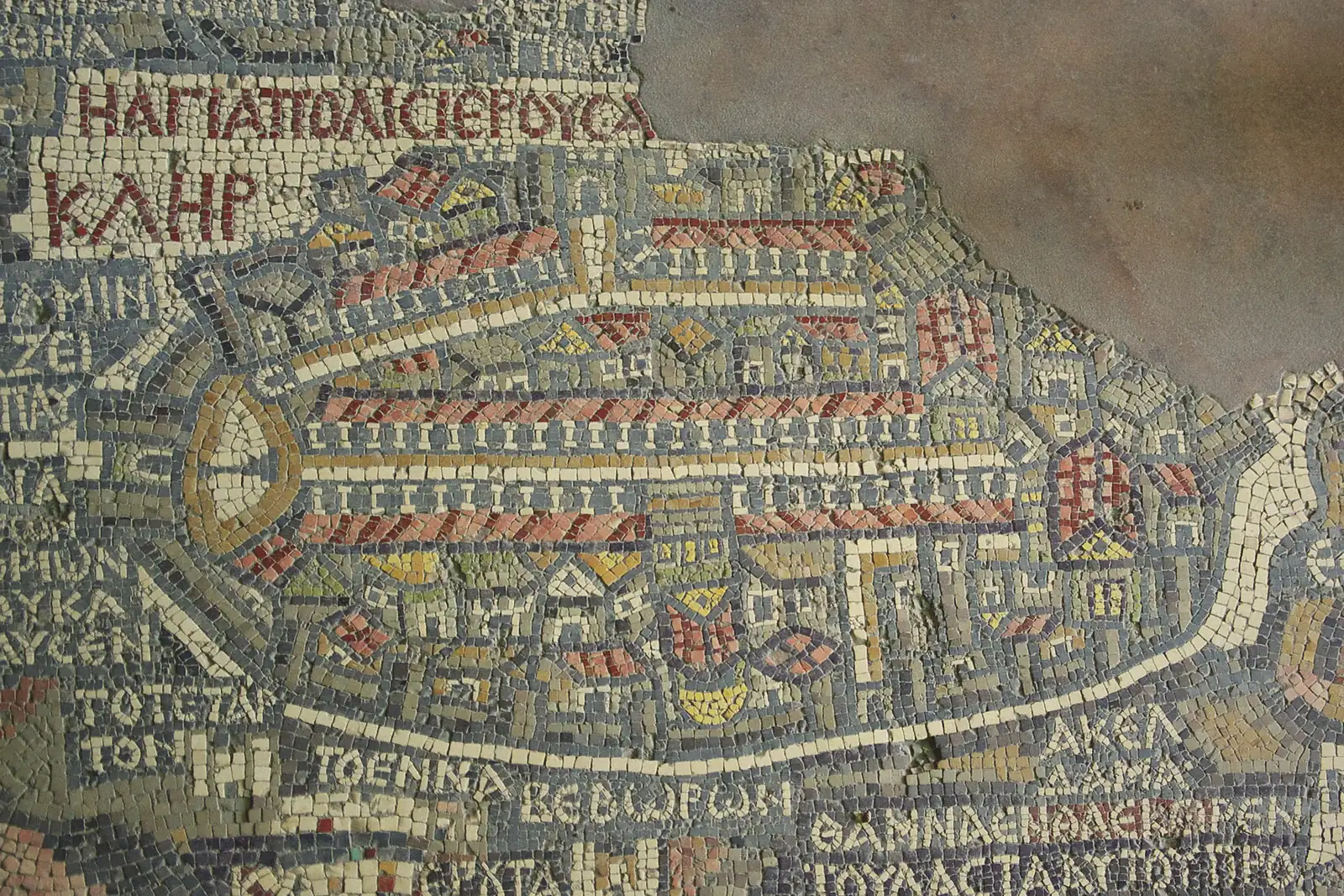
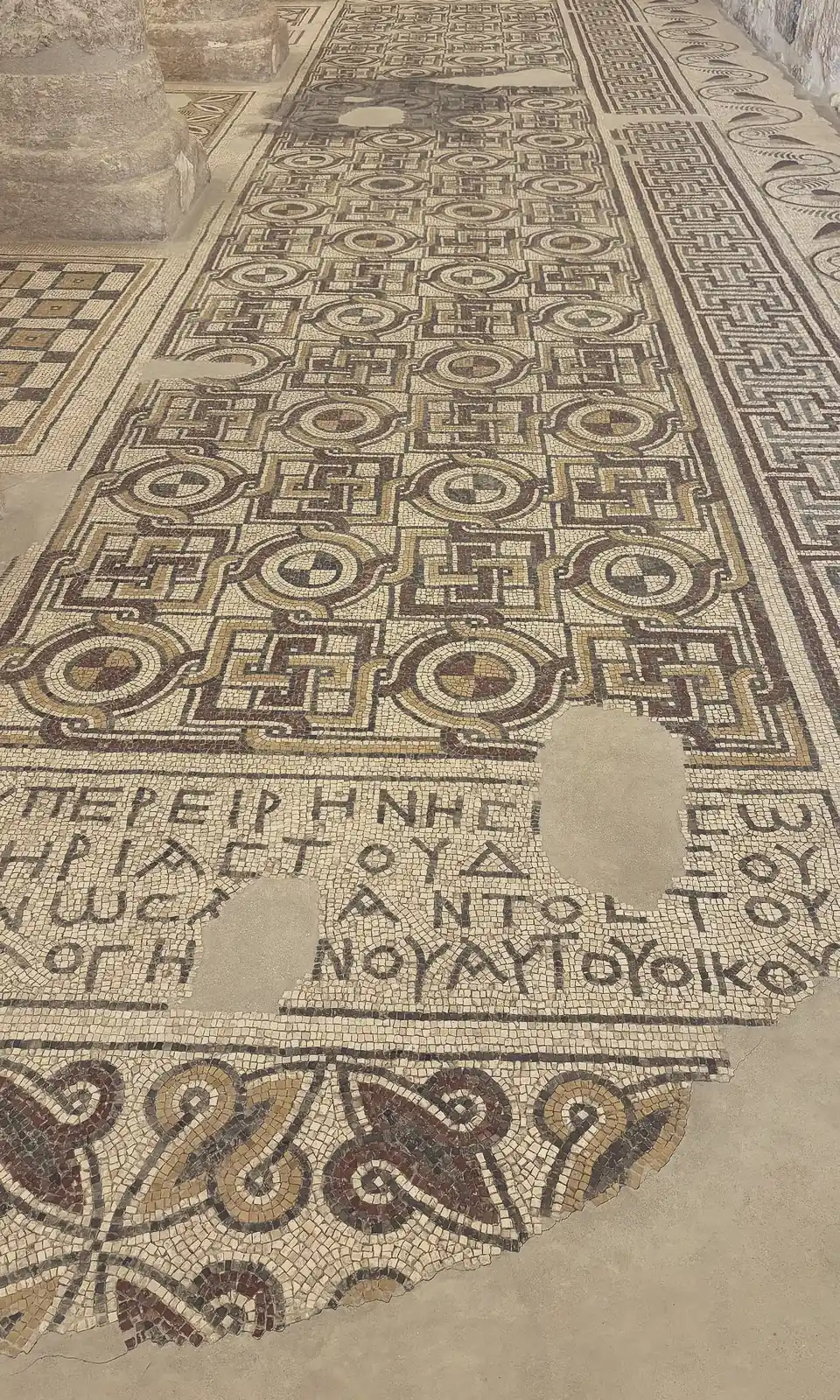
The best-known floor in town is the map in St George’s Church, a sixth-century mosaic of the Holy Land with Jerusalem drawn in the middle, its walls, its gates and its long colonnaded street. Pieces of it turned up in 1884, when the ground was cleared for a new church, and only part of it survives. Within a short walk, the Archaeological Park and the Church of the Apostles keep more of the town’s floors, and the Madaba Institute for Mosaic Art and Restoration, beside the park, teaches people to make them and mend them. Go and see them before you eat.
None of these floors is ours, and nothing in our dining room is old. We laid its floor ourselves in 2021, from the last tins of offcuts in the workshop.
Who does what
There are four of us at the fire. Of the two of us who grew up in the yard, the elder has the oven. He is in the yard while it is still dark, can tell from the colour of the dome when the stones are ready, and lets nobody else rake the embers. The younger has the room, the bookings and the long table, and answers the email at night. Our baker comes from the village on the Mukawir road; she learnt on her mother’s taboon and slides a round off the peel faster than you can follow. Our cook moves between the oven and the fire all day. She came to us from a hotel kitchen in Amman and makes the mansaf and the maqluba the way her family in Karak makes them.
Photography and type
The photographs of Madaba are used under their licences:
- St George’s Church. Photograph by Berthold Werner (Madaba BW 7), CC BY 3.0.
- Jerusalem on the Madaba Map. Photograph by Berthold Werner (Madaba BW 8), CC BY 3.0.
- A church floor with a Greek inscription. Photograph by Zaaiinnaa5 (Mosaics of the Basilica, Madaba), CC BY 4.0.
- A figure carrying a basket, from a floor in Madaba. Photograph by Verity Cridland (108 Detail of mosaic at Madaba), CC BY 2.0.
Type, all under the SIL Open Font License 1.1:
- Eczar by Vaibhav Singh for Rosetta
- Mirza by KB-Studio, Lasse Fister and Eduardo Tunni
- Instrument Sans by Rodrigo Fuenzalida and Jordan Egstad for Instrument
- Mada by Khaled Hosny